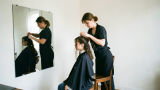
A haircut model is only the entrance. Once the same idea is extended to skill practice, portfolio building, school training, mystery shopping, product testing, and university research, services that normally cost thousands or tens of thousands of yen can sometimes drop to free, a few hundred yen, or around ¥1,000.
The discount is not magic. “Free” usually means: please lend us some combination of your time, feedback, data, face, dog, or stomach. Once that exchange is visible, the system becomes a useful cost-cutting tool rather than a random coupon hunt.
1. What can actually get cheaper?
| Area | Examples | Why it gets cheaper | Check first |
|---|---|---|---|
| Hair | Cuts, color, perms, straightening, treatments | Practice or photo models | Hair history, time, correction policy |
| Brows, lashes, nails | Brow wax, shaping, lashes, nails | Skill practice, portfolio | Gender, age, target style |
| Esthetics and relaxation | Facials, “small-face” treatments, slimming, bodywork | First visit, monitor, acquisition | Upselling, contracts, treatment risk |
| Self-whitening | LED sessions | Trial or model campaign | Visits versus irradiation rounds |
| Food | Restaurants, takeaway | Mystery shopping | Required order, photos, receipt, deadline |
| Student restaurants | Culinary-school service | Real-customer training | Dates, reservations, limited servings |
| Pets | Grooming, training | Model animals for classes | Breed, age, health, weekday rules |
| Legal consultation | Inheritance, property, etc. | Student legal education | Excluded and urgent cases |
| Psychological consultation | Ongoing interviews | Graduate training | Not medical care, intake process |
| Acupuncture | Interview, examination, treatment | Clinical training cooperation | Student role and supervision |
| Product monitoring | Beauty devices, daily goods | Feedback and survey data | Up-front purchase and reward rules |
| University research | Experiments and surveys | Research participation | Eligibility, time, compensation, ethics |
Minimo explicitly describes “practice model” menus for skill improvement or photography, sometimes at special prices or free, across hair, nails, lashes, brows, and esthetics.[1]
2. Six exchanges that create “almost free” prices
Most extreme discounts fit one of six models: someone needs practice; someone needs portfolio photos or reviews; a school needs real customers; a company needs evaluation data; a researcher needs participants; or a business wants a very cheap first visit to acquire a new customer.
So cheap does not automatically mean suspicious, and it does not mean charity either. The other side is receiving something valuable too.
3. Beauty is unusually good for this. What do you search for brows?
Beauty works well because repeated hands-on experience matters and many services have limited downside compared with high-stakes medical or engineering work. Current Minimo listings still include free haircut practice models.[1]
For eyebrow grooming, useful terms are “eyebrow styling,” “brow wax,” “brow trim,” and, if you want to change hair direction, “brow lamination” or “brow lift.” On Japanese services, searches such as アイブロウ モデル, 眉WAX モデル, and 眉毛スタイリング 練習モデル are much more targeted than simply typing “eyebrows.”
4. A ¥20,900 service really was listed at ¥1,000. Then the eligibility rule appeared
One publicly listed 90-minute “small-face” treatment in 2026 showed a regular price of ¥20,900 and a first-time price of ¥1,000—about 95.2% off. A student offer was ¥990.[2]
The brain reacts quickly: Book it.
Then the listing reveals that the salon is women-only.[2]
Eligibility: not eligible. End of speedrun.
The practical lesson is to read eligibility before admiring the discount: gender, age, student ID, first-time-only rules, previous visits, and required dates can turn 95% off into 100% unusable.
The article also does not endorse claims that a facial treatment produces permanent structural change. Japan’s Consumer Affairs Agency has documented cases where claims of immediate and lasting small-face effects lacked reasonable supporting evidence.[3] “Interesting ¥1,000 experience” and “permanent result” are separate claims.
5. Can men use these deals?
For food mystery shopping, many projects accept men. Beauty is more variable. Fancrew currently has a dedicated feature for beauty monitors open to men, including hair and bodywork listings.[4]
Male-friendly categories commonly include men’s hair, brows, facials, relaxation/bodywork, men’s hair removal, and self-whitening. Some slimming or esthetic campaigns are women-only, so never infer eligibility from the thumbnail.
The rule is simple: read the eligibility before the price. “Not eligible” beats ¥1,000 every time.
6. Mystery dining is not simply “eat and get money back”
A mystery shopper uses a business as an ordinary customer, then reports on service, cleanliness, explanations, and the purchase experience. Mystery Shopping Research lists restaurant, retail, e-commerce, phone-service and other surveys, with compensation varying by assignment.[5] Fancrew also runs consumer-participation monitoring for restaurants and beauty services.[4]
The workflow is usually: apply → get selected → read conditions → visit → order required items → keep photos and receipt → submit questionnaire → review → receive reward.
The classic failure is doing the meal correctly and the survey incorrectly: forgetting the required dish, eating before taking the required photo, throwing away the receipt, or missing the deadline. At that point the mystery shop quietly turns back into ordinary dinner. Dinner is still good. The budget spreadsheet may disagree.
For a first assignment, choose simple photo requirements, fewer questions, and a restaurant whose normal price would be acceptable even if the reward failed.
7. A first esthetic trial can be excellent entertainment—enter with an exit plan
As of September 2026, Tokumoni listed slimming-esthetic trials priced at ¥980 with a ¥980 reward, displayed as effectively free.[6] That is a strong way to sample a service you would not normally buy.
But first-visit pricing is also a customer-acquisition tool. Japan’s National Consumer Affairs Center has a current FAQ about a free self-esthetic trial followed by strong sales pressure and a high-priced contract; it also notes that self-esthetic services are generally not considered subject to the same cooling-off rules as certain regulated continuous-service contracts.[7]
If you only want the trial, decide your exit before entering: no long contract today; take the total price, number of sessions, and cancellation rules home; and separate the experience from the sales pitch.
Do not select higher-risk treatments just because they are discounted. Japan’s Consumer Affairs Agency has warned about nerve injuries and other problems from HIFU treatments at esthetic salons.[8]
8. ¥1,000 self-whitening is cheap—but count what “two times” means
A ¥1,000 visit is low compared with current published examples. WhiteningCafe lists ¥4,980 for one visit, with two eight-minute LED irradiation sets inside that visit.[9] White Magic lists two eight-minute irradiations at ¥4,950.[10]
So “two times” may mean two separate visits, or two irradiation rounds during one visit. Those are completely different deals. Check the number of visits, the number of light rounds, and how many sets are included per appointment.
9. Schools and universities hide surprisingly cheap services
Nagoya Tsuji Gakuen Culinary College announced a 2026 student restaurant for the public at ¥1,000 per meal by reservation.[11]
Tokyo Business Academy recruits model dogs for student classes and advertises free grooming and free training, subject to age, interview, and weekday conditions.[12] Apparently even the dog can join the training economy.
Nagoya University’s Student Legal Consultation Office offers free consultation to people inside and outside the university, although it excludes categories such as ongoing litigation and urgent matters.[13] Aichi Gakuin University’s Psychological Clinical Center is a graduate training facility where interviews are generally handled by graduate students under faculty guidance; its clinical psychological interview fee is ¥2,000, and it is not a medical institution.[14]
Tokyo Kuretake Medical College’s acupuncture clinic lists ¥2,000 for ordinary treatment and ¥1,000 when the patient cooperates with student clinical training.[15]
Research participation is another route. A University of Tokyo laboratory currently recruits participants for experiments with compensation that varies by study and time required.[16] Here, the trade is not “cheap service” but time and research cooperation in exchange for compensation.
10. Search for the reason something can be cheap
Useful Japanese search patterns include:
○○ 練習モデル○○ モニター募集○○ 実習協力○○ 学生サロン○○ 学生レストラン○○ 一般のお客様 募集○○ モデル募集 無料○○ 附属施術所○○ リーガルクリニック○○ 覆面調査 実質無料○○ 研究参加者 募集 謝礼
The key is not merely finding a cheap shop. Find the institution that has a reason to subsidize your visit: trainee, school, research lab, survey company, or first-customer campaign.
11. Where should you not optimize for “rookie cheap”?
This strategy is best where a bad result is limited and reversible. A haircut slightly too short, an eyebrow shape you do not love, or an annoying restaurant questionnaire is manageable.
Major medical or dental procedures, legally required vehicle inspection or critical repair, electrical work, and structural construction are different. Do not choose them purely because an inexperienced person is cheap. Formal supervised education is one thing; unqualified, unsupervised cheap work is another.
Save money on price, not on the safety standard. Otherwise the sequel comes with an invoice.
12. Thirty-second checklist before booking
Check eligibility; first-time and prior-use rules; whether payment is up front or reimbursed later; cashback caps; required menu items; receipts, photos, reviews and questionnaires; submission deadlines; cancellation fees; photo/publication consent; total visit time; whether sales counseling is included; whether a long contract is optional; and whether “two times” means two visits or two rounds in one visit.
That short check prevents two classic endings: “95% off, but not eligible” and “effectively free, but the receipt disappeared.”
13. Bottom line: the real hack is finding exchange markets, not coupons
Once the haircut-model idea is expanded, it reaches beauty, brows, esthetics, whitening, food, student restaurants, pets, legal and psychological consultation, acupuncture, product testing, and research participation.
The common structure is exchange. You provide practice opportunity, photos, feedback, evaluation, data, research cooperation, or acquisition value. If what you give is cheap to you and valuable to the other side, the monetary price can collapse.
So the strongest order is not see price → book. It is check eligibility → check the exchange → check safety → then look at price.
A ¥20,900 service can indeed become ¥1,000. The final boss is usually written in smaller text.
References (16)
- Minimo, official explanation of practice-model menus minimodel.jp
- Public Minimo small-face listing and women-only listing page: / https://minimodel.jp/list/4/23/179/537?p=2 minimodel.jp
- Consumer Affairs Agency, unsupported effectiveness claims including small-face correction caa.go.jp
- Fancrew, beauty monitors open to men classic.fancrew.jp
- Mystery Shopping Research ms-r.com
- Tokumoni monitor listings tokumoni.jp
- National Consumer Affairs Center, free self-esthetic trial and high-priced contract faq.kokusen.go.jp
- Consumer Affairs Agency, HIFU risk warning caa.go.jp
- WhiteningCafe whiteningcafe.jp
- White Magic FAQ white-magic.jp
- Nagoya Tsuji Gakuen student restaurant, 2026 sanko.ac.jp
- Tokyo Business Academy model-dog program tsb-yyg.ac.jp
- Nagoya University Student Legal Consultation Office law.nagoya-u.ac.jp
- Aichi Gakuin University Psychological Clinical Center agu.ac.jp
- Tokyo Kuretake Medical College acupuncture clinic kuretake.ac.jp
- University of Tokyo laboratory participant recruitment biochem.ch.a.u-tokyo.ac.jp