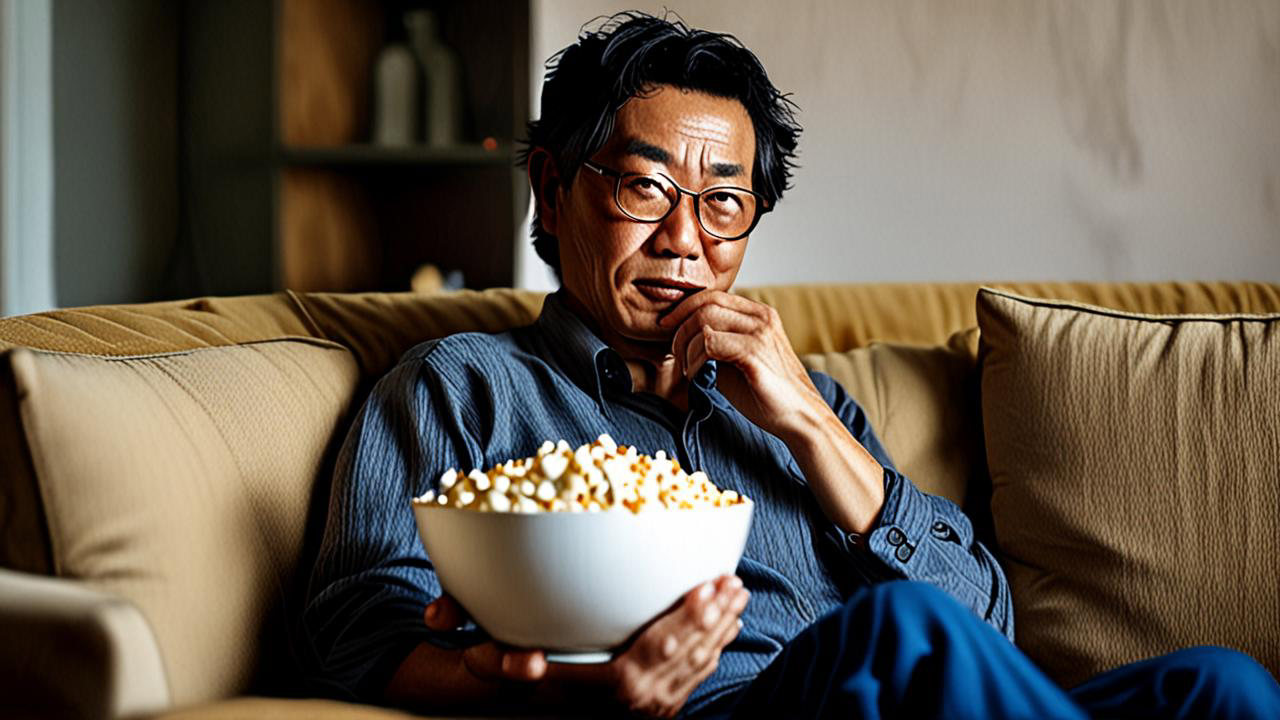
Why does the fantasy of being adored in Oni no Hanayome feel both appealing and heavy? For me, the sticking point was less the love itself than the form of rescue: a powerful partner seemed ready to take all of life's worries into his own hands. Being on the receiving end sounds enviable. But the moment I imagine expecting a real partner to fill that role, the burden becomes hard to miss.
This article sets out my impressions after stopping about 10 minutes into the TV anime, checked against the official introduction to the work. It is not a review of the series as a whole, Yuzu's later growth, or how the relationship develops. I discuss the opening premise, but I do not speculate about or criticize later episodes or an ending I have not watched.
Within those limits, my reaction is simple. I understand the joy of being cherished. But when romance seems to come with a guarantee for your entire life, I start imagining myself as the person who has to provide that guarantee. If I could be the one protected by someone so dependable, I would want to say it too: “Move over! I'm the bride here!” That is my joke, not a line from the work. It captures the difference between receiving support and providing it.
What Is Oni no Hanayome About? Start with the Official Premise
The story takes place in a Japan where humans live alongside ayakashi, supernatural beings. The official synopsis describes a world in which ayakashi have exceptional abilities and looks, hold considerable power in society, and instinctively find their destined “bride.” The idea that being chosen as an ayakashi's bride is an aspiration and an honor is part of this fictional world's values.[1][2]
The protagonist, Yuzu Shinonome, grows up neglected by her family and compared unfavorably with her younger sister Karin, who has been chosen as a fox spirit's bride. Into her life comes Reiya Kiryuin, an oni, one of the beings at the pinnacle of the ayakashi world. The official character introduction identifies him as the next head of the Kiryuin family. His recognition of Yuzu as his bride is the encounter that sets the story in motion.[1]
Someone whose family never valued her gains a place to belong by being chosen by an extraordinary partner. It is natural to read that opening as a Cinderella story. In fact, the official introductions describe it as a Japanese-style ayakashi Cinderella story.[1][2] Instead of waiting for a magical carriage, she encounters an oni with extraordinary powers. Seen that way, it is easy to understand the kind of reassurance and reversal the work offers.
That is the extent of what the introductions establish. The official synopsis alone does not confirm that “Reiya guarantees every part of Yuzu's life,” “he solves every problem involving her relatives,” or “destiny means his love can never change.” What follows concerns the image of rescue that I took from the premise.
The Sweet Moments with a Handsome Partner Are Part of the Appeal
Being chosen by someone beautiful, being treated kindly, having someone stay close to you: I understand the pleasure of those moments. One of the attractions suggested by the opening is the reversal in which Yuzu, long treated coldly, becomes someone who is cherished.
For example, imagine standing close to your partner in front of relatives who used to look down on you, showing them, “This person values me.” It is easy to see why that would feel satisfying. This is an imagined example of the appeal of such a reversal, not a claim that this scene occurs in the first 10 minutes. A display of affection can communicate a change in how someone is treated without a lengthy explanation. Alongside the sweetness of romance, there is the relief of escaping a situation in which your worth has constantly been denied.
Being physically close to someone you love, holding each other, becoming a place of safety for one another: I am not saying that these things are burdensome in themselves. Mutually wanted affection and consideration can matter in real relationships too. What unsettled me was how much responsibility seemed to come along with that intimacy.
Why Did the Devotion Feel Heavy?
A partner who is powerful, wealthy, socially influential, and even endowed with supernatural abilities chooses you without hesitation. It is easy to read more than “finding a boyfriend” into that premise. It also suggests protection from whatever threatens your daily life.
To me, that ideal seemed to combine several roles in one person: romantic partner, financial provider, someone who secures a home, a protector from danger, and a source of support for emotional recovery. Take the idea a little further, and he becomes someone who sorts out family relationships too. This is not a list of what Reiya actually does across the entire series. It is the image of a partner who can take care of everything that the premise brought to mind.
A story can make that dependability possible through extraordinary powers and a family's resources. Real people, however, have limits when it comes to work, living expenses, housing, health, time, and emotional capacity. Wanting to cherish someone does not necessarily mean being able to solve all their problems at once.
Listening after a difficult day, for example, is different from ensuring that your partner never worries about the future again. Respecting their family is different from taking on that family's financial problems indefinitely. When those distinctions disappear, sweet romance can start to look like a relationship that demands responsibility without limit.
I Understand the Wish to Be Rescued
Someone who has not been cherished at home, has no safe place to belong, and has never had their worth acknowledged meets a person who chooses them without hesitation. Of course that kind of rescue is appealing. If someone accepts your hurt without making you explain it all from the beginning, and even tomorrow's living arrangements feel secure, you can finally relax.
You no longer have to worry about work or living expenses. You can spend sweet moments with someone you love, and your family will be treated with care too. On top of that, this person is attractive, strong, and kind. There is no need to bring a realistic household budget into the picture every time you enjoy that fantasy.
What I want to consider here is not whether people should have that wish. It is what happens when we leave the story behind and tell a real partner, “If you love me, you should be able to do all of this.” Conditions that make an ideal appealing are not necessarily conditions that a person with limits can take on.
Part of the pleasure of watching a story is being able to imagine both receiving help and giving it. This time, even while understanding the joy of being rescued, I found myself thinking about the time and resources the supporting role would require. That shift in perspective made the premise feel appealing and heavy at the same time.
Marriage and Moving in Together Make the Burden Easier to See
The following is a hypothetical example for thinking about real relationships, not a description of the plot. Imagine several hopes coming together: wanting to confirm an intention to marry before moving in, wanting a proposal first, wanting clear plans for housing and household finances, wanting ongoing expressions of affection, and wanting one's family to be respected too.
Each hope has its reasons. Discussing the future is not necessarily unreasonable, nor is hesitating to change your living arrangements while the relationship remains undefined. I am not trying to blame people for wanting reassurance or call every concrete commitment restrictive.
The question is where the work and risk required to make those hopes a reality end up. Decisions, moving and housing costs, uncertainty about household finances, coordination with relatives, the emotional work of listening and responding, and the cost of changing work plans or giving up new opportunities: is the assumption that one person takes on all of that while the other simply receives security?
“I want to get married, so let's plan our future together” and “If you want to marry me, first remove every worry I have” may sound similar, but they are different. The first leaves room for discussion. The second can become a demand for guarantees with no endpoint, however much preparation has already been done. That distinction is what feels heavy when I imagine rescue-centered romance becoming a real-life role.
Love and Practical Security Can Be Discussed Separately
“I love you, so I want to support you” can coexist with a discussion about the limits of that support. Caring for someone does not have to become a promise to guarantee how their entire life turns out.
For example, there are questions worth discussing:
- Which income or savings will cover living and housing costs, and in what proportions?
- If relatives need support, what will you provide, how much, and for how long?
- Who will handle housework, paperwork, and scheduling, and how will that change during busy periods?
- How will you manage periods when income changes because of a new job, retraining, or another undertaking?
- If anxiety or distress continues, what other sources of support can you use so that a partner does not have to carry it alone?
This is not an argument for splitting everything exactly in half. Illness, unemployment, accidents, or family circumstances may mean that one person provides more support for a time. If incomes or physical capacities differ, equal amounts of money or equal workloads are not necessarily fair.
What matters is that an uneven burden does not become invisible, and that both people can revisit it as circumstances change. “There will be periods when one person provides more support” needs to be distinguished from “One person must shoulder unlimited responsibility from the start because of their gender or to prove their love.”
What Happens When an Ordinary Person Is Asked to Be Prince Charming?
Real life includes work, taxes and social insurance contributions, rent, planning for the future, and responsibilities involving one's own family. Raising children adds more demands on time and energy. These are not concerns unique to men. Every person entering a partnership has a life of their own to manage.
Add the expectation of always being emotionally steady, earning enough, taking care of one's appearance, consistently expressing affection, doing housework, supporting a partner's career, dealing with relatives' problems, and never showing exhaustion, and anyone will approach their limits. Each item may be desirable on its own. Requiring all of them all the time changes what the list means.
A story can push financial and time constraints into the background and put dependability front and center. In real life, time spent on one thing leaves less time for another. On a day with extra overtime, it is difficult to expect the same amount of housework, attention to relatives, and emotional care as usual.
So the question I want to ask is not “Why have an ideal like that?” It is “If one person is expected to provide all of that, what will be scaled back, what will be shared, and who will support them?” The person giving support also needs rest and room to receive help.
Enjoying a Fantasy and Making It a Real-Life Minimum Requirement
Wanting to be chosen unconditionally, never betrayed, treated as uniquely special, and accepted along with a painful past: enjoying those wishes in fiction can be separate from demanding all of them from a real partner. Liking Oni no Hanayome does not establish that someone is looking for a real-life Reiya.
The same perspective can be applied to wish-fulfillment stories marketed to men. Imagine a heroine who always affirms the protagonist, conveniently takes care of him, and puts her own fatigue and wishes last. It becomes easy to see how the burden on the person providing support can remain out of view. This is not a claim about every work; it is a comparison that still holds when the roles are reversed.
Stories sometimes heighten the pleasure of receiving by leaving out the effort and limits involved in giving. Enjoying that omission does not make anyone wrong. It goes too far to infer readers' or viewers' personalities, views on romance, or real-life behavior from their taste in fiction.
Only when we bring those expectations back into real life do we need to remember that the other person also needs rest, experiences uncertainty, and needs support. This is not about which gender is better. It is a reminder not to make care and responsibility permanently flow in only one direction.
What Would I Want to Discuss When Building a Life Together?
The alternative this premise brought to mind is a relationship in which two people run their life together, rather than being permanently cast as rescuer and rescued. You could call it a joint venture, but I do not mean replacing affection with calculations of profit and loss. I mean that both people treat the practical work of sustaining a shared life as their own concern.
For example, when choosing a home, consider the budget, commutes, and time for housework alongside personal preferences. If one person wants to change jobs, look at the change in income and any extra burden that would fall on the other. If parents need help, do not stop at “Of course, they're family.” Discuss what help is needed, how far it will go, for how long, how much it will cost, and who will provide it.
Helping when needed is different from making every problem your partner faces your sole responsibility. Respecting relatives is also different from unconditionally guaranteeing their livelihood. I think being able to discuss boundaries makes it easier to sustain support without overextending anyone.
This approach is not reserved for people with equal incomes or for those who can always live without assistance. Even in relationships where illness, disability, or caregiving needs call for long-term support, it is possible to respect the person's wishes and plan a life that also draws on available services and help from others. Needing support should not be equated with imposing an unlimited obligation on one person.
Having a voice of your own without being isolated. Neither only receiving security nor only providing it, but supporting each other as circumstances require. I think that also means not deciding in advance that one person will always be the one to give up freedom and new opportunities.
What Remains in the Joke “Move Over! I'm the Bride Here!”
Even after thinking through the burden, I still find the idea of receiving that kind of dependable care enviable. Someone strong, beautiful, and devoted offers both sweet moments and security in everyday life. If such an ideal partner chose me, it would be easy to joke that I wanted the bride's seat.
The point of that line is not merely to get a laugh by swapping genders. It is that women are not the only people who want the joy of being protected. Wanting to be cherished, feel safe, worry less about living expenses, and have one's family respected can belong to anyone, regardless of gender.
From the receiving side, it looks appealing; from the providing side, the effort becomes visible. That asymmetry was the most interesting part of this experience for me. The person doing the supporting may, in fact, want to be protected in the same way. Remembering that makes the joke an opening for thinking about roles, rather than a way to mock the work.
How Much Can I Say After Stopping at About 10 Minutes?
I stopped watching because the roles I associated with this opening felt heavy to me. That is a matter of how I responded to a short portion of the work. It does not establish that the rest of the series continues to portray only one-sided rescue.
What choices does Yuzu make later? How does she support Reiya? What problems do they face together? Assessing those points would require watching further. I want to avoid concluding from the opening and official introduction alone that “the heroine has no agency” or “the relationship never becomes equal.”
For someone drawn to the opening's joy of being chosen and reassurance of finding a place to belong, this premise may be a reason to become interested. Someone sensitive to relationships in which the burden gathers around the rescuer may find the same opening tiring. Neither reaction proves the overall quality of the work one way or the other.
This article concerns the TV anime. The original novels, manga adaptation, and live-action film each have their own forms of expression. I refer to introductions to the source material and film to establish the identity of the work and distinguish its media adaptations; I have not mixed judgments about the film's acting or plot into my impressions of the anime.[3][4]
Conclusion: I Can Enjoy the Sweetness and Still Question the Scope of Responsibility
The opening of Oni no Hanayome offers a readily understandable fantasy of rescue: someone who has been mistreated is chosen by an extraordinary partner and cherished. A handsome man, supernatural powers, sweet interactions, and the satisfying reversal of becoming someone who is valued: I understand the pleasure in all of that.
What began to feel heavy was imagining one real person providing that entire sense of security alone. Expressing love can be separate from taking unlimited responsibility for someone's livelihood, future, and relatives' problems. If the aim is to support each other, I think both people should be able to discuss what they will take on and how far that responsibility extends.
These are reflections prompted by about 10 minutes of viewing, not a verdict on the whole work. I want to leave room for both the pleasure of dreaming about an ideal partner and the limits of a real one. And if there really is someone magical who can take care of all of it without overextending themselves, my final line remains the same: “Move over! I'm the bride here!”
References (4)
- Official website of the TV anime Oni no Hanayome: Official synopsis, character introductions, and information about the work and its medium. Used to verify the premise discussed in this article.
- Novema! official introduction to the Oni no Hanayome TV anime: The publisher's synopsis and anime adaptation information. Used to cross-check the premise.
- Novema! official introduction to the original Oni no Hanayome series: Used to confirm the relationship between the original novels and the manga adaptation.
- Official website of the live-action Oni no Hanayome film: Used to confirm that the film is a separate medium from the TV anime. Not used to evaluate the film's content.
Official information checked on October 15, 2026. Descriptions of the established premise are distinguished from this article's own impressions and hypothetical examples.