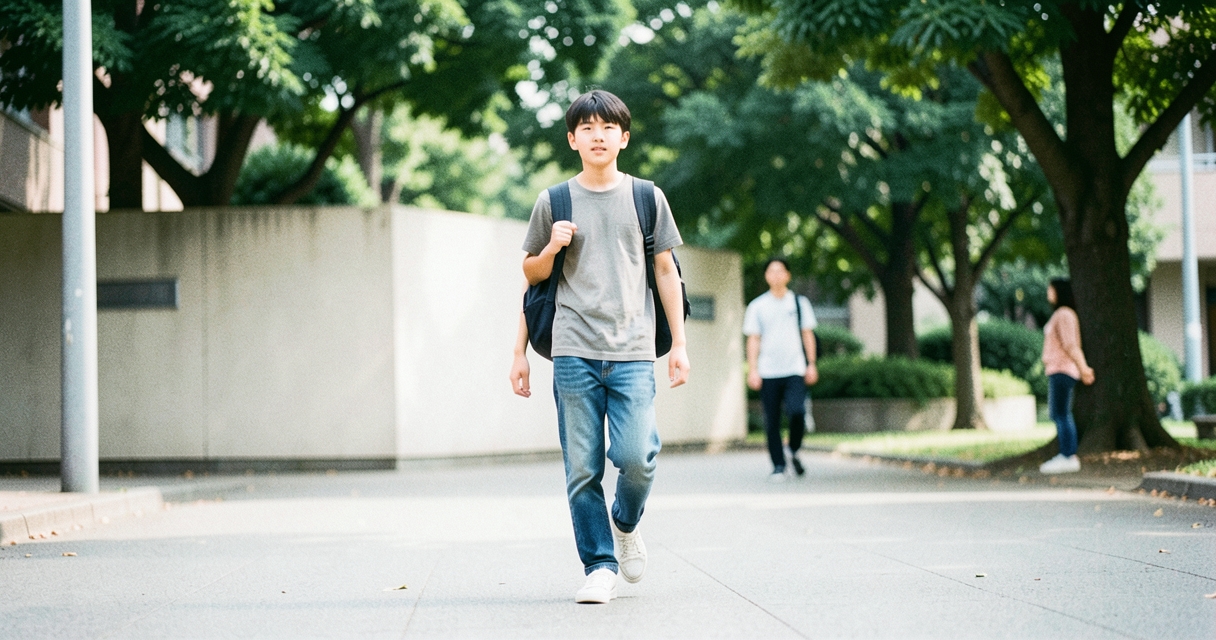
Description: A student got along naturally with a classmate who received extra support—until adults praised the kindness and assigned a helper role. Why can a good intention make friendship feel like a job?
At school, talking with a classmate who received extra support had been ordinary. Someone said hello; someone answered. Sometimes they laughed at the same silly thing. Nobody needed a handbook.
Then an adult praised one student for being especially good at talking with those classmates and gave them a role in an organized exchange activity.
Suddenly, a normal conversation came with an invisible checklist: Am I helping enough? Am I saying the right thing?
They had been classmates. Now one felt like an employee.
The problem isn't kindness. It's the job title.
There is nothing wrong with setting up opportunities for students to meet, or thanking a student who offers help. Real assistance matters.
But friendship isn't supposed to run in one direction. Friends can help each other, disagree, make terrible jokes, ask for space and turn down invitations. Neither person is permanently the giver or the receiver.
Call one child the designated helper, and the relationship can start to feel like a service. Every conversation becomes a performance review that nobody asked for.
The adult may mean well. The awkwardness can still be real.
What research can—and can't—tell us
In a US study, researcher Zach Rossetti spoke with 44 students without intellectual or developmental disabilities about friendships with classmates who had them. Students described limited chances for genuine interaction; some described approaching these classmates as people to help rather than as potential friends.
The study is qualitative. It does not prove that praise or assigned helper roles always damage friendships. It does help explain why shared time and mutual interest matter more than simply telling one person to be nice to another.
Teachers can open the door. They don't need to write the entire friendship script.
So what should happen instead?
Create chances to spend time together doing something everyone enjoys. Ask what kind of help someone wants rather than assuming. Let both students say no, start a conversation, or make the next plan.
And when ongoing support is required, adults and the school should make sure it exists. One classmate shouldn't become the permanent unpaid support system.
Equal treatment doesn't mean pretending that different needs don't exist. It means recognizing that a person is more than a need.
When students naturally become friends, great. When they don't, that is allowed too.
The strangest part of this story is that ordinary friendliness earned someone an unexpected promotion. Maybe friendships don't need a human-resources department.
Source: Rossetti, Z. (2024), “Not Sure How to Approach Them the Right Way”, https://doi.org/10.1177/07419325231221215. The study offers context; it does not establish the cause of this individual experience.