To get back from the Chiran Peace Museum to Kagoshima-Chuo Station by local bus, you need the Tokko Kannon Iriguchi stop, and buses there are sparse: at some times of day the gap is more than two hours. Here is how I nearly missed the late-afternoon bus, what the ride back was like, and what to check so it does not happen to you.
0. Bottom line: the final boss in Chiran was the bus timetable
After a heavy, emotional visit in Chiran, the plan sounded simple: head back to Kagoshima-Chuo Station.
Then I checked the return bus.
There was one I could still catch if I left right away. Miss it, and the next useful bus was much later. Depending on the time of day, buses on this route can be more than two hours apart. In the moment, it felt like a "nearly three-hour wait" penalty.
A few minutes earlier I had been quietly reading historical exhibits. Now I was sprinting to a bus stop.
I reached the stop. The bus appeared at almost the same moment.
That was way too close.
The lesson is simple: in Chiran, check the return bus before you start sightseeing.
1. Tokko Kannon Iriguchi to Kagoshima-Chuo: don't expect city-bus frequency
From the Chiran Peace Museum, the stop for regular buses back toward Kagoshima is Tokko Kannon Iriguchi.
Kagoshima Kotsu, the local bus company, lists the route between Chiran and Kagoshima-Chuo Station on its official site. But this is not a place where another bus shows up in 10 or 20 minutes.
On this trip, I was aiming for the 3:56 p.m. bus.
I had stayed inside until a few minutes before it left. The second I saw the time, the visit turned into a race. I reached the stop just as the bus came into view.
One more minute and my whole evening would have looked different.
One important note: Kagoshima Kotsu changed the times on the Kagoshima–Chiran route in its October 1, 2026 timetable update. Treat the times in this story as a record of my trip, not as a schedule to copy. Always check the latest official timetable before you go.
Bus timetables are not museum exhibits. They change.
2. I made the bus. Then round two: motion sickness
I got on.
Victory.
For about five minutes.
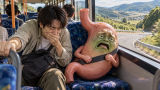
Then came the nausea.
I had already felt carsick on a bus that morning, so the long ride back was rough. I wanted to check the map, but looking at my phone made it worse. I wanted to know when we would arrive, but reading anything was the last thing I wanted to do.
When you travel, your phone is your map, timetable, plane ticket and restaurant guide all in one.
With motion sickness, it suddenly becomes a glowing rectangle that hurts you.
The UK's National Health Service and the US Centers for Disease Control and Prevention both suggest things like looking at a fixed point or the horizon, not reading or staring at screens, and getting fresh air when you can.
So "put the phone away and look ahead" is real advice, not just a pep talk.
Inside my head, though, the thinking was much simpler:
"How much longer?"
3. We were already in the city. Why weren't we there yet?
Eventually the bus reached central Kagoshima.
Around Arata Hachiman, I was sure Kagoshima-Chuo had to be close.
It was close.
It was also not there yet.
A long local bus ride feels longer than it looks on a map, especially when you feel sick. Every red light becomes an event. Every stop becomes a side story.
Buses share the road with everyone else, so small delays are normal. By now I had started working out which airport bus I could still catch.
And then it hit me.
I had spent half the afternoon thinking about buses.
4. The sweaty passenger next to me handed me a snack
There was also a strange little moment on board.
The passenger next to me kept wiping away sweat. Because I felt sick, the smell seemed stronger than usual.
I said nothing. I did not complain, and I don't think it showed on my face.
But when he got off, he apologized for the trouble and handed me a small snack.
Wait.
I hadn't reacted at all.
He was probably worried about bothering the people around him.
So the story went from:
"This smell is rough while I'm carsick"
to:
"Why did I just get a snack?"
People can be full of plot twists.
Motion sickness can also make you more sensitive to smells, so what feels unusually strong in the moment is not always about the other person.
5. The doors opened, and fresh air felt like a healing spell
Then the bus stopped.
The doors opened.
Outside air rushed in.
Perfect.
When you have felt sick for a long time in a stuffy bus, a few seconds of fresh air feels ridiculously valuable.
Air had been free all day. Suddenly it felt premium.
The NHS also lists fresh air as one of the simple things that can help with motion sickness. My body had figured that out before I read it anywhere.
Doors open.
Fresh air.
I'm alive again.
Doors close.
Back to survival mode.
6. Dinner at Kagoshima-Chuo? First, another bus
By the end of the ride, all I could think about was food.
Something from Kyushu, ideally Fukuoka-style.
Ramen or dumplings would do.
Then I looked at the options, passed on a chain restaurant, and noticed the nausea still had not gone. Instead of forcing down dinner in the city, I decided to go to the airport first and eat later.
And how do you get from Kagoshima-Chuo Station to Kagoshima Airport by public transport?
Another bus.
Of course.
Kagoshima Kotsu says the airport bus leaves from East Bus Stop 21 at Kagoshima-Chuo. Under the April 2026 timetable, there are fairly frequent buses in the evening, and the ride takes about 40 minutes. Kagoshima's official tourism site also says about 40 minutes, with no reservation needed.
Compared with the sparse Chiran route, missing one airport bus is no big deal.
But when you feel sick, just seeing
bus → bus
feels like a threat.
7. If I go to Chiran again, I'll pick my bus back first
The practical lesson is simple.
Before you start sightseeing in Chiran, decide how you are getting back.
A quick checklist:
- Check the latest timetable from Tokko Kannon Iriguchi toward Kagoshima.
- Pick the bus you want and the next one as a backup.
- Plan from the time you need to be at the stop, not the time you want to leave the museum.
- If you have a flight or train afterward, aim for an earlier bus.
- If you get carsick, look up your stop and rough arrival time before you get on, so you don't have to stare at your phone.
- If you start to feel sick, put the screen away, look ahead or at the horizon, and get fresh air if you can.
- Before a long bus ride, skip whatever you know makes your motion sickness worse, like heavy meals, strong smells or alcohol.
"I'll figure it out when I get there" works great where buses run often.
On a quiet route, it can turn into a machine that makes two-hour waits.
8. The moment I remember most wasn't in the museum
The visit itself was intense. There was a lot to think about.
Yet the last scene stuck in my memory goes like this:
"Bus!"
"Run!"
"Made it!"
"It's here!"
"I feel sick!"
"Fresh air!"
Travel is often like that. You go for something big, but what stays vivid are the few unplanned minutes in between.
The closest call of the day wasn't the flight.
It was reaching a country bus stop at almost the same second as the bus.
And the best luxury of the day wasn't a fancy service or a famous view.
It was plain outside air coming in through an open bus door.
Official information to check before you go
- Kagoshima Kotsu: Ibusuki and Chiran route information https://www.iwasaki-corp.com/kagoshima_kotsu/route-bus/myplan_ibusuki/
- Kagoshima Kotsu: October 1, 2026 timetable update https://www.iwasaki-corp.com/post-3904-2-4/
- Kagoshima-Chuo Station bus stop guide https://www.iwasaki-corp.com/kagoshima_kotsu/route-bus/bus-stop-information/
- Kagoshima Airport bus information https://www.koj-ab.co.jp/ground-transportation/public-transportation-bus.html
- NHS: motion sickness https://www.nhs.uk/conditions/motion-sickness/