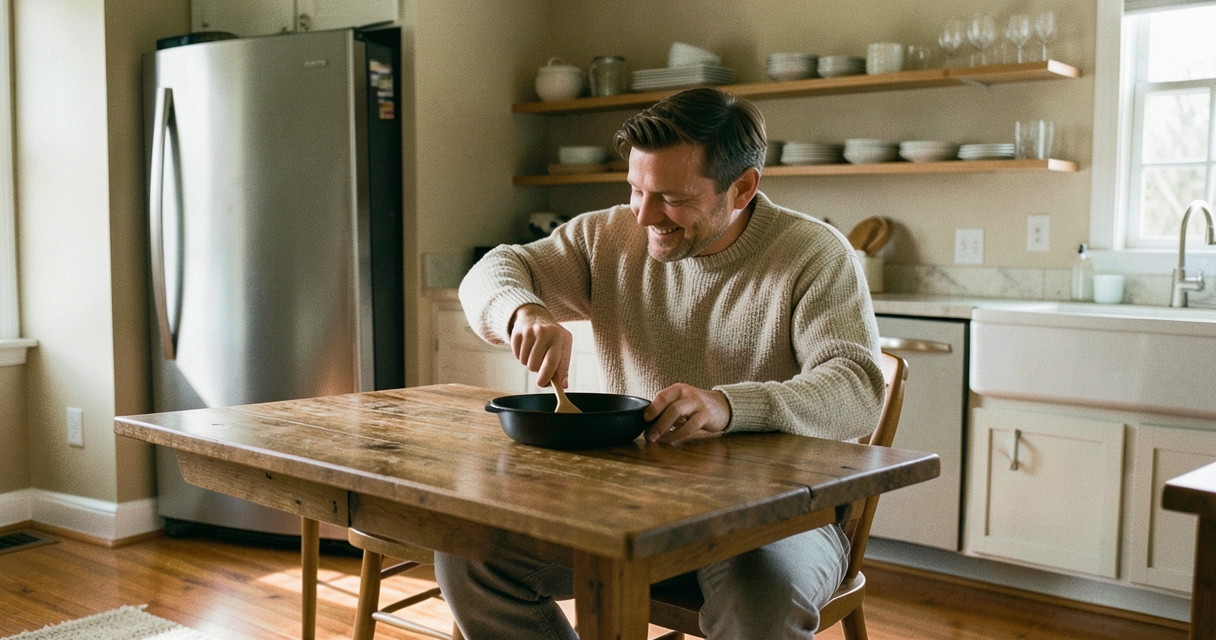
A day off alone can feel good because you get to choose what to do and how much to rest. Choosing some time to yourself is a different experience from wanting company and being unable to find it.
Watch something you love. Go out for a meal. Have a drink you enjoy, linger for a while, and head home. Nothing spectacular happened, yet the day was pretty good.
Unremarkable as an event. Quite promising as a way to live.
Here, I want to separate what research can tell us from my own suggestions for spending a day off. Enjoying your own company should never become an obligation to get through life without help.
Being alone and feeling lonely are different things
Even when you could see family or friends, you might prefer a day at your own pace. Another day, you might want to see someone and have no opportunity to do so. You could be sitting in the same room, but the experience would feel very different.
The number of people present tells only part of the story. How you feel about that time, and how much choice you have, matter too.
Nguyen and colleagues studied the relationship between a tendency to act autonomously and self-determined reasons for spending time alone. Their work involved two diary studies with university students. It was not an experiment showing that choosing solitude makes everyone happier.
Preferring solitude is also different from choosing time alone for reasons you value. Being introverted does not automatically mean that being alone will restore your energy.
Today, solitude might suit you. Tomorrow, you might want a conversation. It helps to leave room for that change.
Autonomy leaves room for other people
Self-determination theory emphasizes three basic psychological needs: autonomy, competence, and relatedness. In everyday terms, these concern acting willingly, feeling capable, and feeling connected to others.
Autonomy does not mean doing everything independently. You can act together with someone, or accept their help, and still feel that you have willingly chosen what you are doing.
Valuing a day to yourself therefore need not become a project to reduce the number of people in your life.
Choose what to eat. Drop a plan when you are tired. Accept an invitation today, or suggest another day. Small choices like these can leave some say over your time in your own hands.
Work, money, caregiving, and parenting can sharply limit those choices. Having little room to maneuver is not a personal failure. The question is whether one small part of today can be yours to choose, even when you cannot rearrange everything.
A meal can be enough to give the day some substance
Eating keeps us alive. But choosing where to go, what to order, and whether to linger afterward can change how a meal feels.
You take a sip and think, “That's good.” Your food arrives and you think, “Glad I ordered this.” You do not need a photo to show anyone for that moment to count.
In psychology, savoring refers to attending to and appreciating positive experiences. Researchers examine how it works, how people differ, and the situations in which it happens. That is not a prescription promising that a favorite drink will always improve your mood.
I find “notice one small pleasure that is already here” a more usable idea than “plan an impressive day off.”
Going out for lunch should not require a happiness performance review afterward. Sometimes, “that tasted good” is enough of a result.
Even doing nothing does not have to be done perfectly
Some days, choosing to rest feels like a relief. On others, you are too exhausted to do anything while unfinished plans keep running through your mind. From outside, both days may look like lying on the couch. From inside, they may feel quite different.
That does not make one good rest and the other bad rest. If you are already worn out, you do not need another mark against you for failing to choose your rest properly.
Sharif and colleagues examined discretionary time and subjective well-being. Their findings suggest that more free time does not simply correspond to ever greater well-being, and that how time is spent also matters. Some experiments asked people to imagine a hypothetical daily life. They did not assign people different amounts of actual rest and then test the effects. The research cannot establish everyone's ideal resting time.
A useful question, when you have the energy to ask it, is what you want from your time. Rest? Something to relieve boredom? A conversation? Simply adding more free time may not answer that question.
Some days, “this will do for today” is enough. If every break needs a worthy justification, your day off may hand in its resignation.
A walk is an option, not a 120-minute quota
Walk somewhere for a meal. Take a different route home. If there is an accessible green space nearby, spend a little time there. Getting outside does not have to become a major exercise project.
A 2019 study by White and colleagues examined time spent in nature and self-reported health and well-being. Compared with people who reported no nature contact, groups reporting at least 120 minutes a week were more likely to report good health and high well-being.
This was an observational study. It does not establish that spending time in nature caused those differences, or that everyone needs a minimum of 120 minutes. It also studied time in nature, not specifically the effects of walking.
For a day off, I would treat this as a reason to consider somewhere easy to reach that suits your health and mobility, rather than count how many minutes you still owe this week. Being unable to walk or go out does not disqualify you from having a good day.
If a destination makes it easier to leave the house, a meal you look forward to can provide one. Let lunch take you out for a walk.
My rough 70/30 idea: keep the familiar, change a little
A favorite place to eat, something you enjoy watching, a familiar route: a comfortable routine can be useful. It can also feel a little stale sometimes.
My suggestion is to keep the basic shape and change a small part. If I put a number on it, that would be 70 percent familiar and 30 percent different. This is my rule of thumb, not a scientifically established happiness ratio. There is no need to calculate it.
- Order something different at your usual place
- Change only the drink
- Take a slightly different route home
- Watch something else
- Contact a friend when you feel like company
If changing everything feels tiring, one change will do. If the usual routine feels good, you need not change anything.
Familiar things do not inevitably lose their value. This is a loose suggestion for adding an option while keeping what makes the day easy, rather than constantly hunting for new stimulation.
Leave room for company and for time to yourself
Knowing how to make a reasonably good day on your own can help you avoid treating every social plan as a rescue mission. But relationships are not services designed solely for your comfort. Other people have wishes and constraints too.
The aim is to make room for both people's preferences and refusals, rather than exclude anyone who ever inconveniences you. Being able to discuss days together, days apart, and times when you need help can increase your choices.
Enjoying someone's friendship is also different from sharing a daily routine and its responsibilities. If you are considering living together, this article on friendship and the practical demands of sharing a home takes up that next question.
When being alone feels painful, you do not have to endure it on the grounds that you should be able to entertain yourself. Contact someone you want to see, look for an approachable place to meet people, or seek support if you need it. There is room for both choosing solitude and wanting connection.
An ordinary day can still be a good day
Watch something you enjoy, eat, get outside for a while if you can, and do very little. It may look as though you accomplished nothing. You still chose a way to spend some time that suited you.
There is no need to declare either solitude or company the source of happiness. How do you want to spend today? How much do you want to rest? Who would you like to connect with? Having some say in the answers is valuable.
Research can help us think about these choices. It is not a timetable that guarantees happiness or a scorecard for how well you relax.
“That was a pretty good day.” If you can say that, the day had something to it, even without a big event.
References (5)
- Ryan and Deci: self-determination theory and well-being. A theoretical account addressing autonomy, competence, and relatedness.
- Nguyen and colleagues: autonomous functioning and motivation for solitude. Diary studies with university students; the associations do not guarantee that time alone improves happiness.
- Bryant: theory and research on savoring. A conceptual review of appreciating positive experiences and questions for future research.
- Sharif and colleagues: discretionary time and subjective well-being. Research considering how free time is spent as well as its quantity.
- White and colleagues: time in nature, health, and well-being. A 2019 observational study; 120 minutes is not an individual prescription.