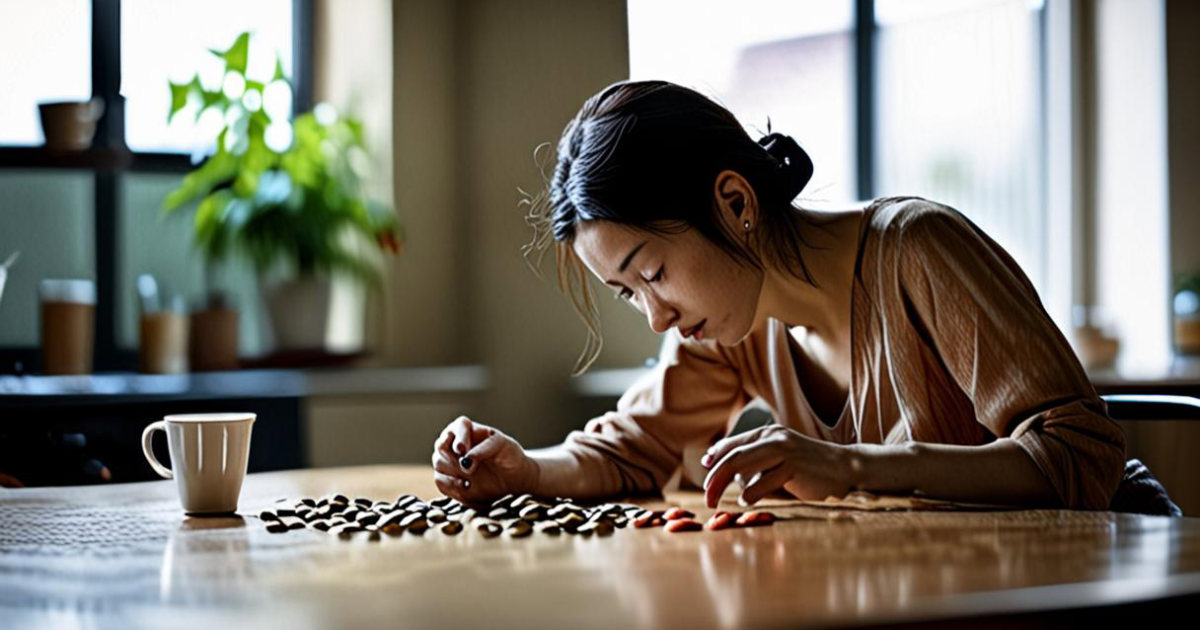
Before moving, I took a pile of small stuff to a resale shop.
Two cardboard boxes.
The offer: ¥500.
All I could do was laugh. Each of those things once cost a few hundred or a few thousand yen, sometimes more. Put them in front of a buyer all at once, and the whole lot came to ¥500 for both boxes.
This wasn't really "did I get a good price?" anymore. Most of it was junk removal that happened to pay me a little.
But something about it clicked.
The low price mattered less than this: two boxes were gone in one go.
Short answer: small things are cheap to buy and expensive to get rid of. In this post I look at that real cost, and at why my spending is drifting toward experiences, saving time, things I use for years, and money for later.
1. Two boxes for ¥500 taught me more about shopping than any budget tip
Small things are easy to buy.
"Looks handy." "Kind of fun." "It's cheap, why not."
Getting rid of them is the hard part.
You have to check if you still use each one. Decide what stays. Pack it. Carry it. Wait for the price. And if nobody wants it, figure out how to throw it away.
One item is nothing. Dozens or hundreds are a real chore.
The easy purchases of the past come back as paperwork-style chores later.
And the final price for all of it was ¥500.
It felt like the world was telling me: "Your little collection is, in the end, mostly cardboard."
Of course, what you paid for something isn't only measured by what it sells for. If it was useful while you had it, you already got that value.
Still, getting one price tag slapped on everything at the exit hits hard.
You remember what you paid. You forget what it will be worth when you let it go.
Once you see that gap, it's much easier to hit the brakes next time you shop.
2. ¥500 isn't a bad deal if you count it as "two boxes gone, service included"
If I had listed each item one by one on a resale app, I might have made more.
But that means photos, descriptions, price drops, answering questions, packing, shipping, and keeping track of what doesn't sell.
Right before a move, what you want isn't the best price. It's less stuff to move and fewer jobs on your list.
Seen that way, ¥500 for two boxes isn't just "I only got ¥500."
Two boxes of stuff disappeared, and I got ¥500 on top.
That's actually pretty reasonable.
The key is not to chase the highest resale total.
Pull out the things that can sell well on their own. Let the cheap, high-hassle stuff go in one batch.
In my case, a SIXPAD (an electric muscle-toning pad) had almost ended up in the "get rid of" pile. I pulled it back out and kept it.
Don't put everything in the same box.
Save the valuable things, and let the rest go along with the hassle.
Sorting this way works better for your life as a whole.
3. Small things have an "exit cost" that isn't on the price tag
The price you pay at the register is only the entry fee.
Once you own something, little jobs start piling up:
- finding a place to put it
- moving it when you clean
- checking it still works
- packing it every time you move
- deciding whether to keep or toss it
- looking up what it sells for, if you sell it
- looking up sorting and pickup rules, if you throw it out
No bill ever arrives for any of this, so it's easy to miss.
But it eats time and attention.
You barely feel it when one more small thing comes home. That's why it's so easy to buy.
Then moving day sends you the whole invisible bill at once.
Owning things has a long tail.
The fun of buying ends fast. The thing itself stays in your home.
Once you notice that long tail, "cheap" no longer automatically means "a good deal."
4. "I think I'm done buying small stuff" isn't extreme; it's just learning
Right after turning two boxes into ¥500, thinking "I don't need any more small stuff" is completely natural.
It's not that I suddenly became a minimalist. It's more that the exit got added to my shopping math.
Before, I decided roughly by:
how much I want it − the price
Now I also add:
the effort of storing, moving, getting rid of it, and deciding
So "it's cheap, so I'll buy it" loses its pull.
Even a ¥500 knick-knack isn't just a ¥500 purchase if, six months later, it's in the way, it goes into a box for the next move, and in the end you have to look up how to throw it out.
On the flip side, something you use every day holds up even if it's pricey.
If you use a ¥10,000 tool for 1,000 days, it's easy to explain why it gets to live in your home.
It's clearer to judge a thing by how many times it will actually show up in your daily life, not by how excited you feel at checkout.
5. So spending shifts toward experiences, less hassle, things that last, and freedom
Once piling up stuff stops being appealing, the better uses of money become clear.
First, experiences.
Trips, meals, fun places, events. None of them go into a cardboard box afterward. You keep the memories and the stories, and they need no storage space.
Second, spending that removes hassle.
Delivery, house cleaning services, faster ways to get around, junk pickup. This is money that buys back your time and attention.
Third, things you use for a long time.
Furniture, appliances, devices, work tools you touch every day. You use them often, and they keep paying you back long after you buy them.
Fourth, freedom later on.
Keep it as savings or investments, so you have room to choose how you work, where you live, and how you spend your time.
The goal isn't to never buy things.
It's to turn money into things that are less likely to tie down your future self.
6. Research backs up spending on experiences and on "buying time"
Studies since the 2000s keep finding that many people say spending on experiences made them happier than spending on things.[1][2]
One reason given: experiences connect more easily with your relationships and your sense of who you are, and they're harder to turn into simple comparisons with other people.[2]
There's also research on spending money to cut down time spent on cleaning, shopping, cooking and similar chores. A study that included more than 6,000 people across 4 countries found that people who spend this way tend to be more satisfied with their lives. In an experiment, people were in a better mood on a weekend when they spent money to save time than on one when they bought a thing.[3]
In other words,
getting time back instead of getting more stuff
isn't just being lazy.
It's a way of spending with enough of a link to happiness that researchers can actually study it.
Another, small study looked at how people who describe their home as "cluttered" or "unfinished" differ in mood and stress-related measures.[4]
That doesn't mean "fewer things always makes you happy."
But it does make sense that more stuff costs you not only storage space but also attention and upkeep.
7. Before you buy, look a little further than "Do I want it?"
You don't need to ban small purchases completely.
Instead, these questions work really well:
Will I probably still use this in six months?
Would I want to pack it in a box myself and take it on my next move?
If I had to get rid of it tomorrow, would I still pay today's price?
Do I already own something that does the same job?
Does this add one more thing, or take away a hassle?
The strongest one is:
"Would I take this with me on my next move?"
In the store, "cute" and "handy" win easily. Picture yourself stuffing it into a moving box, and suddenly it looks a lot weaker.
It's like inviting your future move-out inspection onto the checkout screen.
Not a pleasant filter, but it works.
8. But you don't need to enter an "own the least stuff" contest
Swinging to the other extreme and treating every purchase as a failure would be just as off.
A chair, bedding, appliances, devices or hobby gear you use every day give you plenty back, even though they stay around as things.
Small things are worth it too, if they make you happy every time you see them, if you clearly use them, or if collecting is your hobby.
The problem isn't that it's a thing.
The question is whether it keeps being part of your life after you buy it.
That's what matters.
Things you don't use slowly turn from "my stuff" into "something I'll have to get rid of someday."
Things you use for years, on the other hand, pay for themselves many times over before the exit cost ever shows up.
So the goal isn't an empty home.
It's getting closer to a home where only the things you want to keep remain.
9. Bottom line: maybe the ¥500 didn't sell my stuff, it bought me a new way to shop
Two boxes, ¥500.
Looking only at the money, that's pretty weak.
But if you count it as two boxes of volume and a pile of decisions gone before a move, it means something else.
And if that one sale gave me the habit of "looking at the exit, not just the price," it taught me more than ¥500 worth.
Small things only look cheap at the moment you buy them.
In reality, the moment they come home, they book little jobs for later: storing, cleaning, moving, deciding, and throwing out.
That's why the way you spend money slowly changes.
From more stuff to experiences.
From carrying hassle to getting rid of it.
From things you use briefly to things you use for years.
And money you don't need right now, toward freedom later.
The day two boxes turned into ¥500, my wallet only gained ¥500.
But the number of small things coming into my home from now on has probably dropped a lot.
That may have been the most valuable appraisal of all.
References (4)
- Van Boven, L., & Gilovich, T. (2003). To Do or to Have? That Is the Question. Journal of Personality and Social Psychology, 85(6), 1193–1202 doi.org
- Gilovich, T., & Gallo, I. (2020). Consumers’ pursuit of material and experiential purchases: A review. Consumer Psychology Review doi.org
- Whillans, A. V., Dunn, E. W., Smeets, P., Bekkers, R., & Norton, M. I. (2017). Buying time promotes happiness. Proceedings of the National Academy of Sciences, 114(32), 8523–8527 doi.org
- Saxbe, D. E., & Repetti, R. (2010). No Place Like Home: Home Tours Correlate With Daily Patterns of Mood and Cortisol. Personality and Social Psychology Bulletin, 36(1), 71–81 doi.org